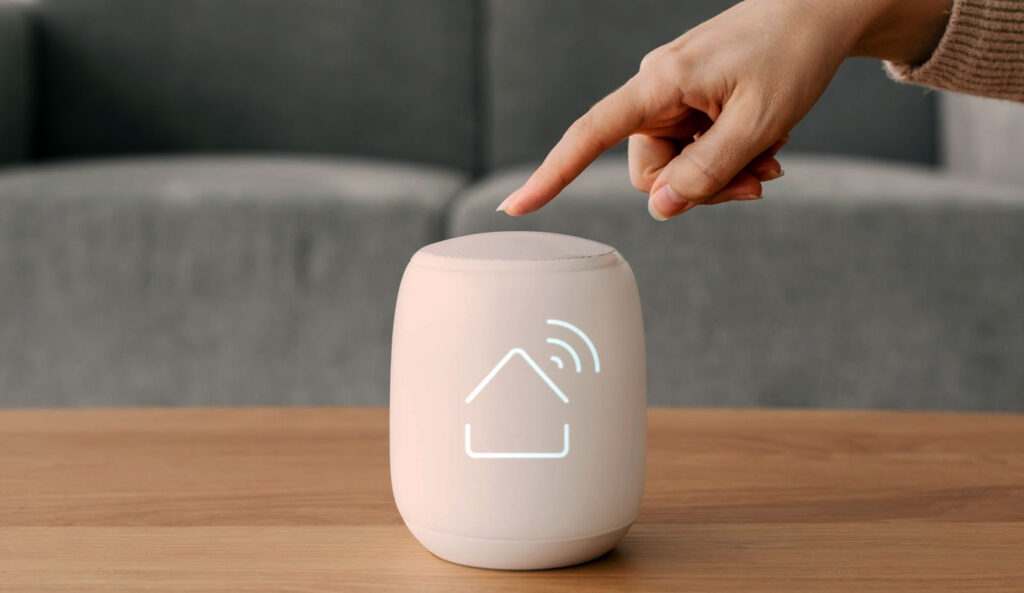
Voice assistants have become one of the most popular smart home features. They allow users to control devices with simple commands, making life easier and increasing comfort. Systems like Amazon Alexa, Google Assistant, or Apple Siri can control lighting, climate control, appliances, audio systems, and even locks.
The benefits are clear: control becomes intuitive, the need for physical interaction with devices is reduced, and automation scenarios can be tailored to the user’s habits. For example, a voice assistant can turn on the lights and coffee machine simultaneously upon a morning command, or turn on the air conditioner and close the curtains when the home temperature exceeds a comfortable level.
Advantages and Features
Voice assistants make your home smarter and more adaptive. Key features include:
- Touchless control of lighting and climate control.
- Creating automated scenarios based on the time of day and occupant preferences.
- Connecting to multimedia systems, audio, and video streams.
- Security monitoring via motion sensors and alarms.
Furthermore, assistants can integrate with external services, including calendars, news, and even financial apps. In some cases, they can alert you to important events or remind you of scheduled activities, making home management more efficient.
Another important feature of modern assistants is the ability to learn user habits. For example, the system can analyze when lights are typically turned on, or when the air conditioner or heating is activated, and suggest automated scenarios. This helps save energy, improve security and convenience, and minimize manual intervention.
Swiss Experience with Smart Homes
In Switzerland, voice assistant technologies are actively being integrated into smart home ecosystems and digital services. One of the main market drivers has been Swisscom, which introduced voice control in its TV set-top boxes as early as 2016. Today, the built-in assistant allows users not only to switch channels but also to control smart home devices through a unified interface. This approach effectively turns the television into a central hub for managing the home’s digital infrastructure.
Global ecosystems also play an important role in the country. Voice platforms such as Google Assistant, Siri, and Samsung Bixby are officially available in Switzerland and support several of the country’s national languages. This enables local developers to integrate voice control into banking services, mobile applications, and home automation solutions. At the same time, devices like the Google Nest lineup are widely present on the Swiss market, further accelerating the adoption of voice interfaces in everyday life.
Particular attention should be paid to Swiss innovation projects in the assisted living sector. In residential complexes developed under the Bonacasa concept, the virtual assistant Anne, based on the ABB free@home® platform, has been tested to help residents control lighting, doors, and intercom systems by voice. The solution is primarily aimed at older adults and demonstrates how voice technologies can enhance user independence. Such cases confirm that in Switzerland, voice interfaces are already moving beyond gadgets and becoming part of the broader social infrastructure.
Voice Technology Beyond the Home
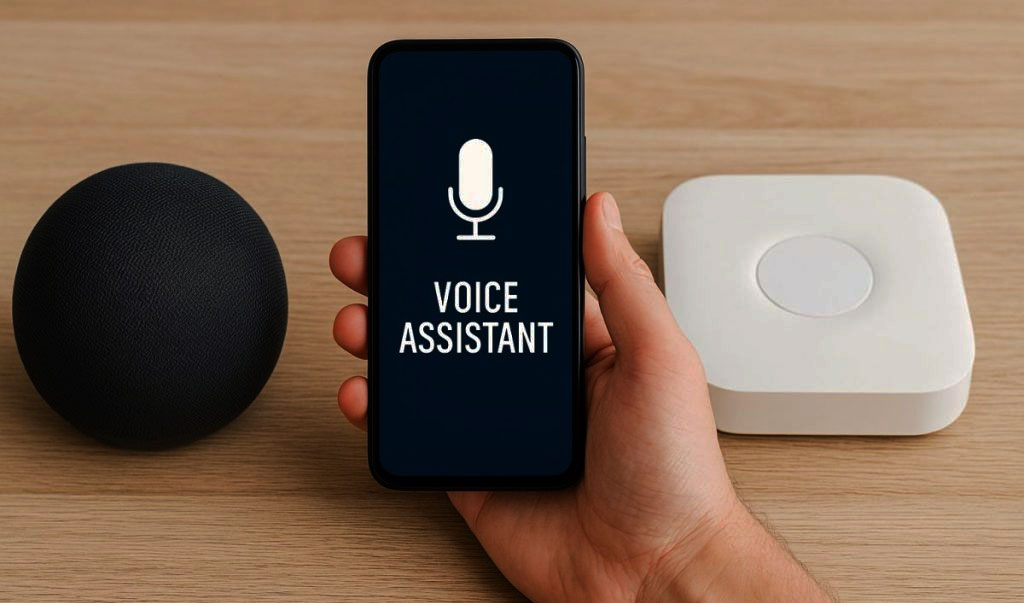
The Swiss experience with smart systems is also relevant beyond private homes. In hospitality, voice-enabled tools can support bookings, multilingual guest communication, service coordination, and a more seamless customer experience.
A concept like Kytaly Genève, an Italian restaurant in Geneva built around tradition, atmosphere, and sensory experience, fits naturally into this discussion. In a setting like this, voice assistants could help improve operational flow while also supporting a more modern and accessible way of interacting with guests.
This shows that voice assistants are no longer limited to domestic use. In restaurants and other service spaces, they can become part of a broader smart environment where efficiency, comfort, and brand identity work together.
Limitations and Challenges
Despite their advantages, voice assistants also have limitations. One of the main concerns remains privacy: devices constantly listen to ambient sound, raising concerns about data leakage. Technical limitations are also important. The system may not recognize a command in a noisy environment or with an unusual accent. Integration between devices from different manufacturers is not always possible: for example, lamps from the same brand may work with Alexa but not with Google Assistant.
Furthermore, the cost of smart devices and their installation can be significant, especially for comprehensive home control. Users sometimes encounter incompatibility with older devices and the need for constant software updates. It’s also worth considering that excessive automation can lead to “loss of control.” If several devices are configured for automatic control, errors in scenarios can lead to unexpected consequences—for example, lights or heating turning on at the wrong time, or security systems failing to trigger correctly. Therefore, it’s important to properly configure and test scenarios.
Future of Voice Assistants
With advances in artificial intelligence, voice assistants are becoming more intelligent and adaptive. They are learning to anticipate user needs, adapt to speech style, consider context, and even emotional state. In the coming years, widespread integration with IoT and smart city systems is expected: voice commands will control not only home devices but also transportation, street lighting, and city services.
It is important to note that the development of these systems will be accompanied by improved data protection and increased command recognition accuracy. This will allow voice assistants to be used as securely and effectively as possible in everyday life. Furthermore, the future of voice assistants lies in the personalization of interfaces. Systems will be able to take into account residents’ individual preferences, offering customized lighting, climate, and multimedia scenarios, and even integrating with educational and entertainment services.
Every year, the capabilities of voice assistants expand: from automating household tasks to integrating with entertainment, educational, and sports platforms. Their development makes smart homes not just convenient, but adaptive, safe, and technologically advanced.